Tiếng Việt
Custom OEM Design & Fabrication of an Autonomous Multi-Station Kitchen Robot System
OEM Automation & R&D Platform
Date: 2025–2026
1. 3D Mechanical Design & Food-Grade SUS304 Enclosure
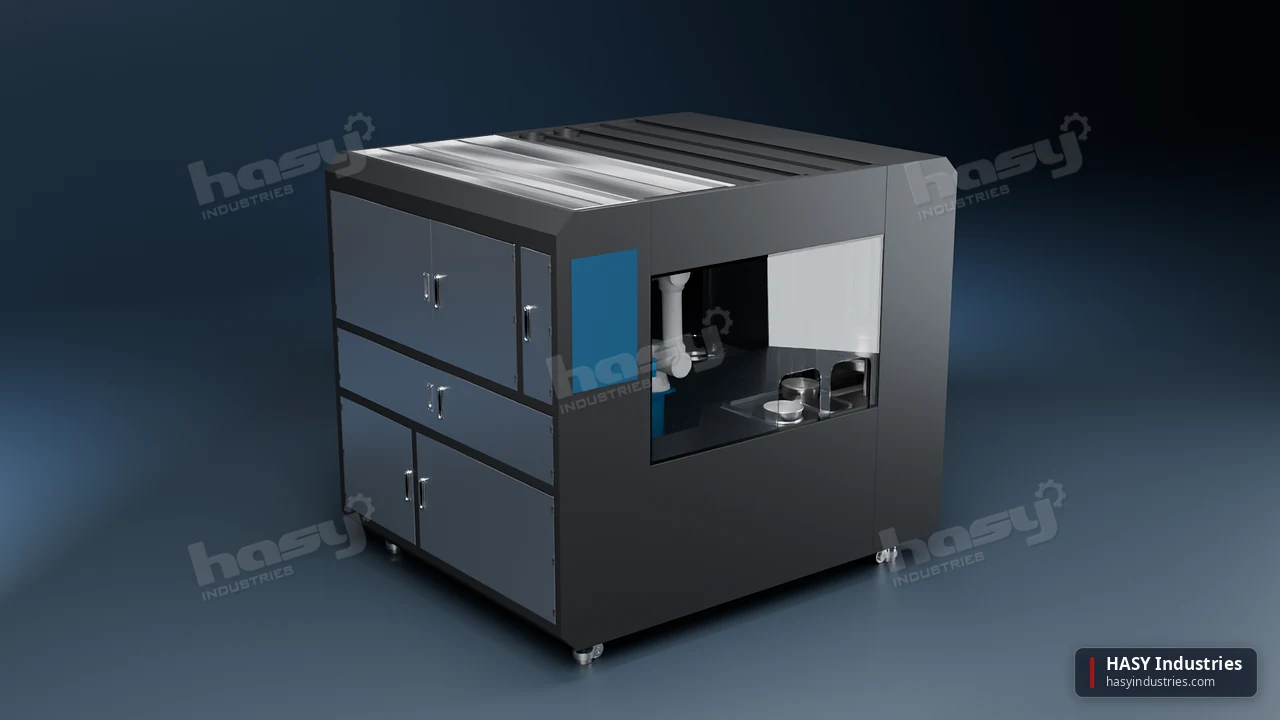
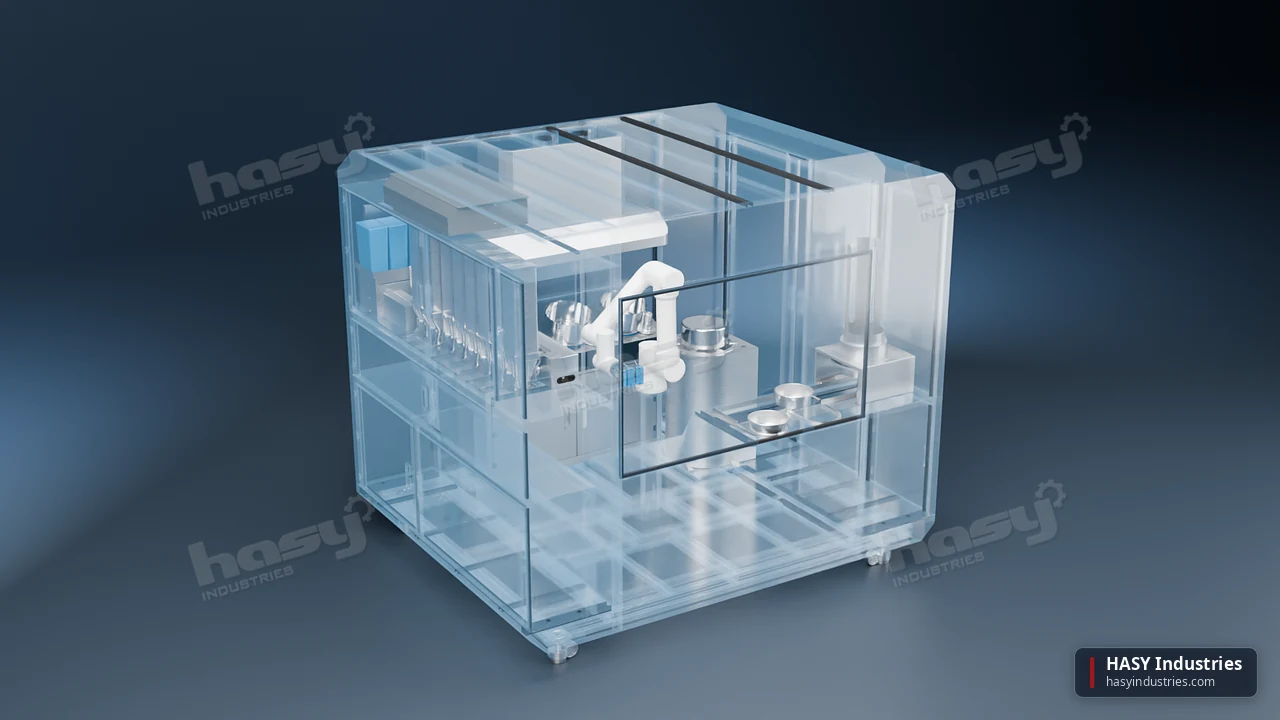
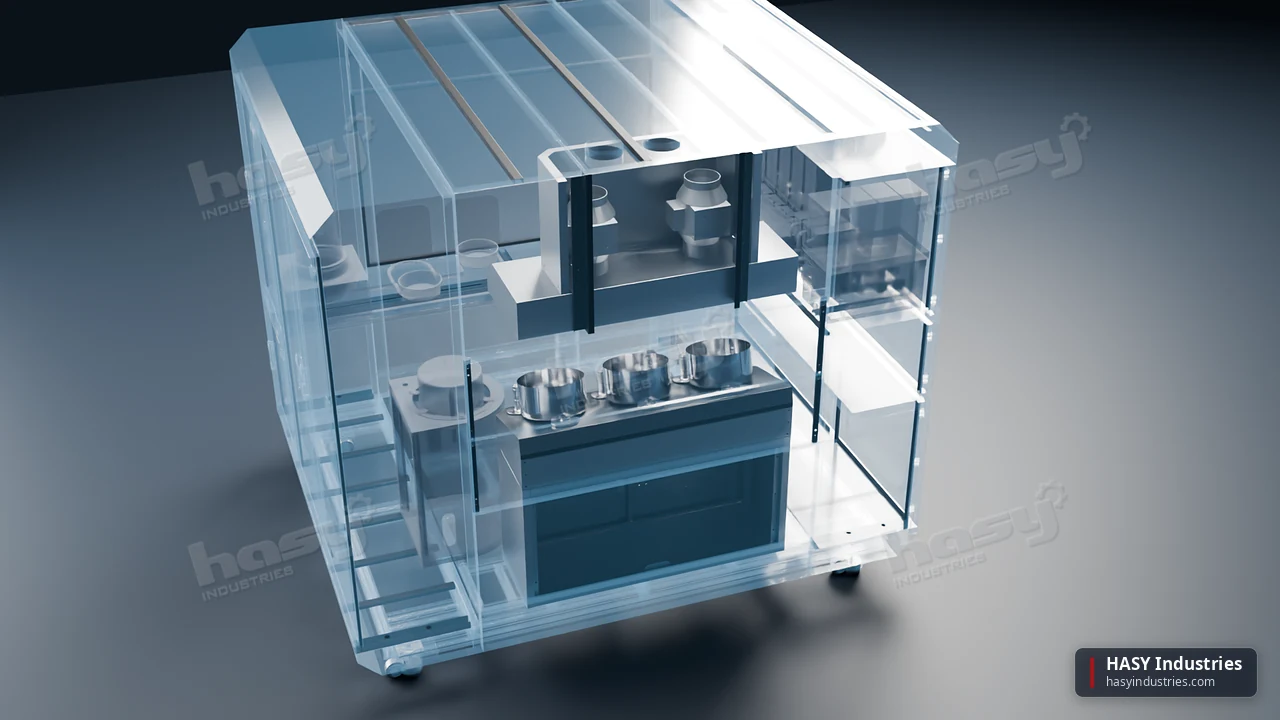
- Full food-grade SUS304 stainless-steel frame and enclosure fitted with a 10 mm front safety-glass viewing window and heavy-duty casters for straightforward transport and site placement.
- Approximate reference footprint of 2,223 × 1,801 × 1,941 mm, with a modular structural layout adaptable to project-specific dimensions and maintenance access requirements.
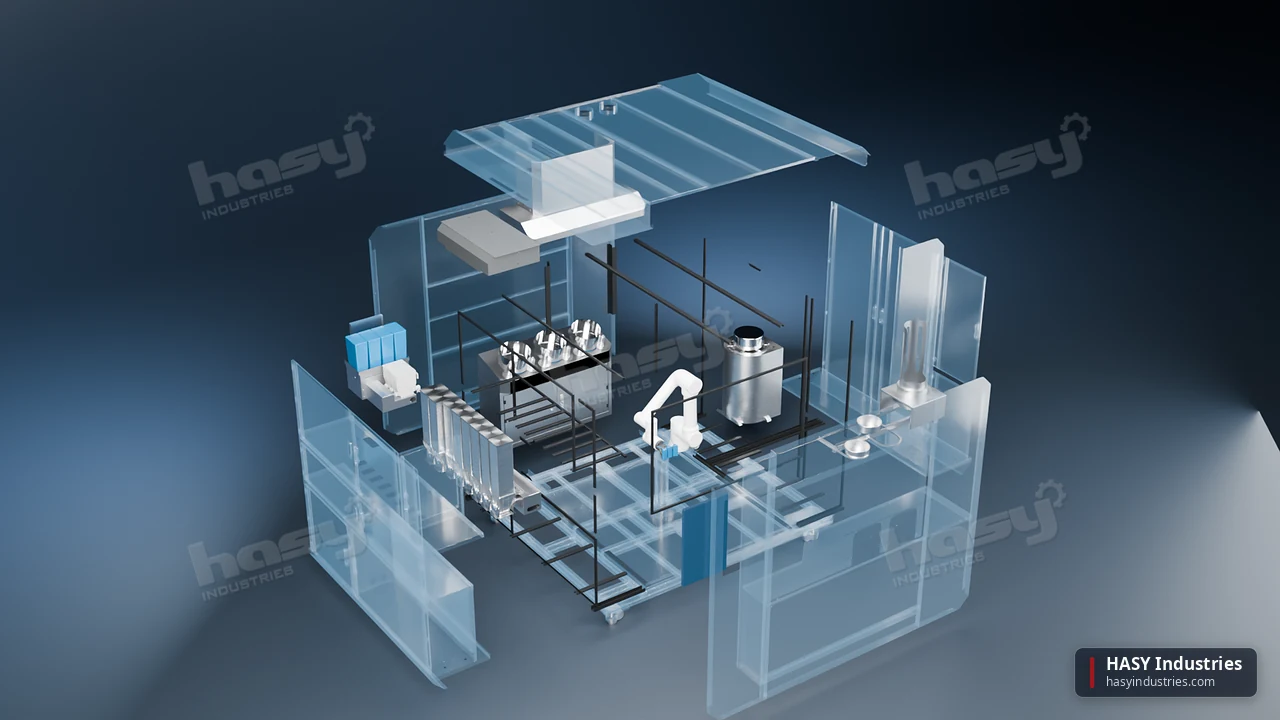
- Integrated chilled pantry with a dedicated cooling coil and triple-fan air circulation to stabilize ingredient temperatures, topped by a commercial stainless-steel exhaust hood with twin fans and three grease mesh filters.
2. Dual Cooking Architectures & 6-Axis Robotic Integration
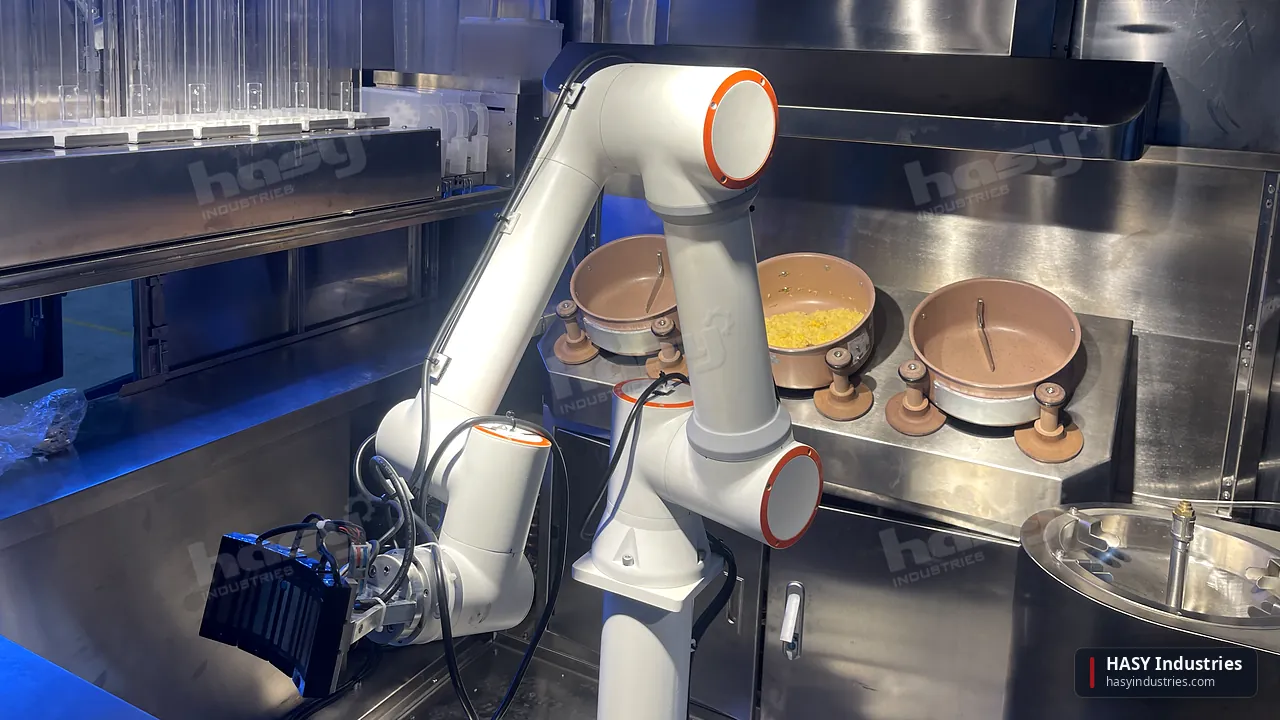
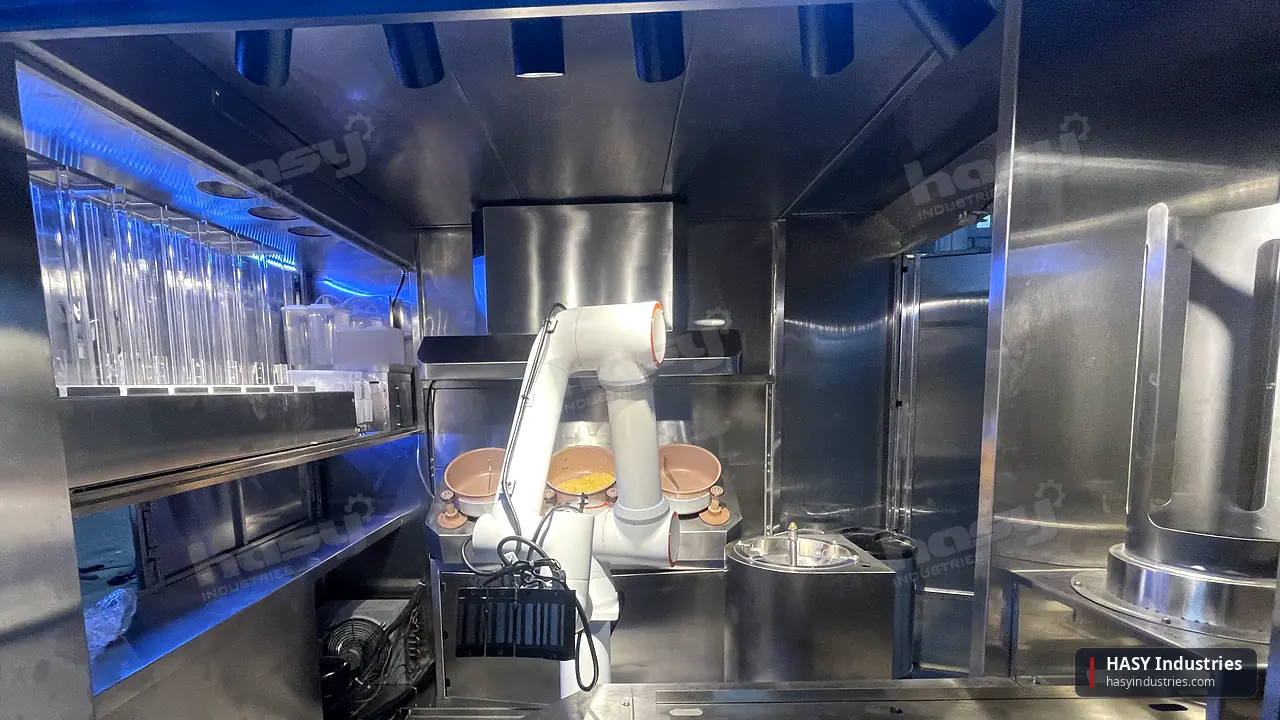
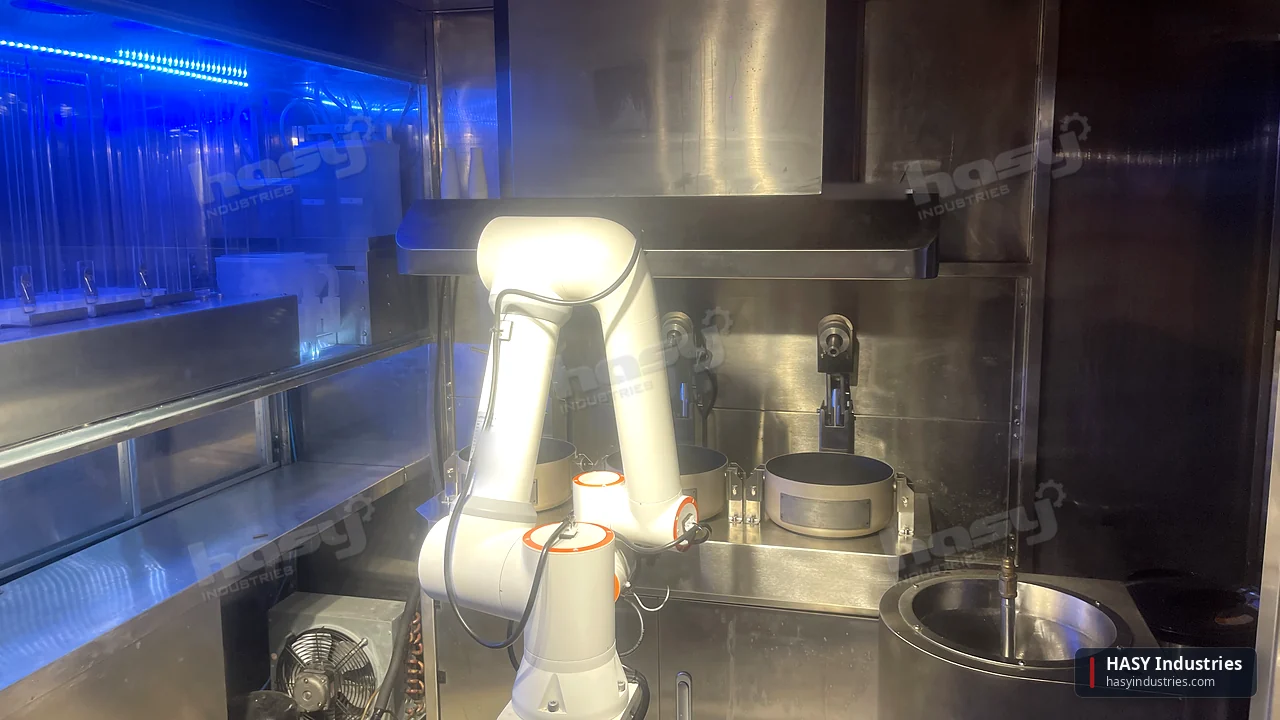
- Generation 1 Platform (rotating self-tossing induction woks): Three independent rotary induction wok stations replicate high-heat tossing motion, tended by a 6-axis industrial robotic arm (5 kg rated payload, 922 mm reach) fitted with a 24 VDC electromagnetic gripper and pot presence sensing to pick, transfer, pour, and wash vessels automatically.
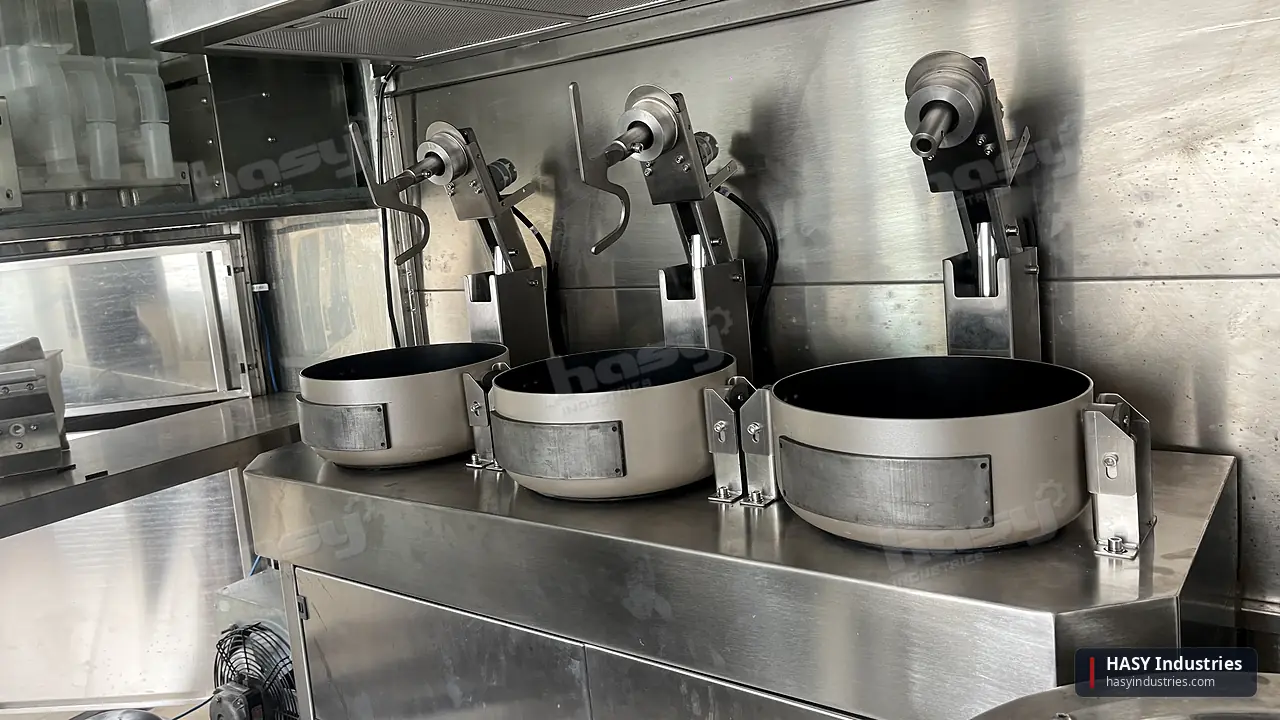
- Generation 2 Platform (fixed deep pots & vertical-lift stirrers): Three fixed cylindrical pots seated on a stainless deck with precision CNC-machined locating forks and roller stops, paired with three motorized stirring columns on independent electric lift actuators (~3 s stroke) and a CNC-machined hybrid mechanical-magnetic end-effector.
- Multi-layer anti-collision safety interlocks: Software supervision combined with hardwired safety relay interlocks guarantees every stirring column stops and retracts to its upper limit switch before the robot arm enters the cooking zone, automatically retracting to a safe home position on power loss, E-stop activation, or cabinet door opening.
3. 15-Channel Dosing, PID Thermal Control & Closed-Loop Pot Washing
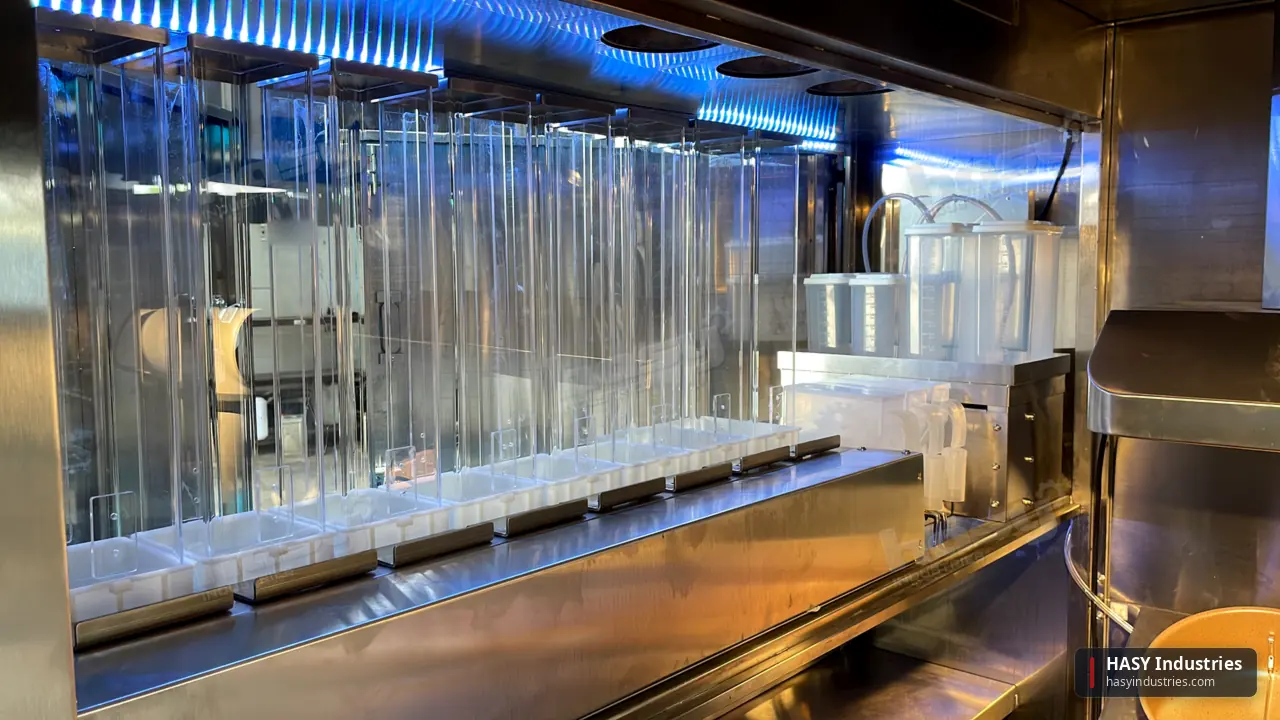
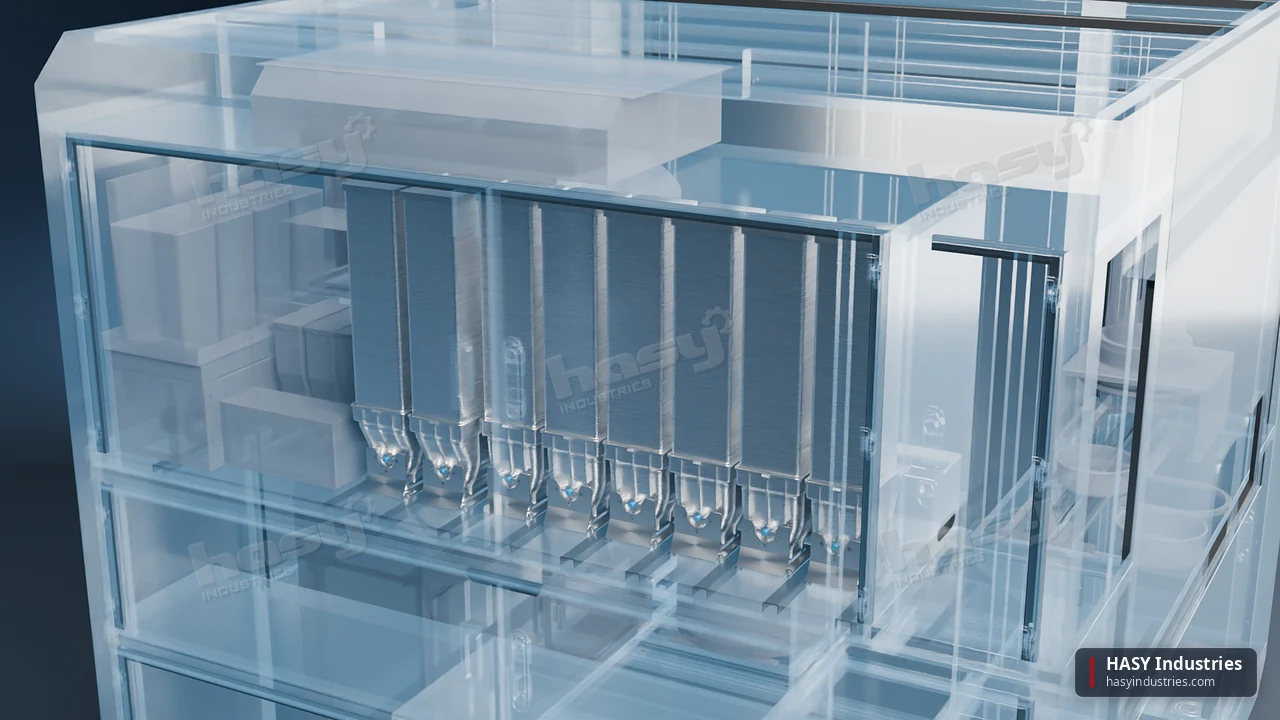
- Precision 15-channel dosing: Eight dry ingredient hoppers, three dry spice dispensers, and four liquid sauce channels (two peristaltic pumps and two timed dosing pumps) with direct gram/milliliter-to-pulse calibration.
- Closed-loop PID thermal control: Three independent induction zones continuously monitored by PT1000 temperature sensors for high-temperature cooking, incorporating two-step safety confirmation above 300°C.
- Automated bowl dispensing & closed-loop pot washing: Vertical bowl dispenser verified by three optical and limit sensors feeds two pickup bays with LED status rings. After plating, the robot transfers the vessel to a high-pressure hot-water washing station to rinse, drain, and return it to service — completing a full observed cycle in approximately 4 minutes per dish.
4. Offline-First Industrial Control & SCADA Architecture
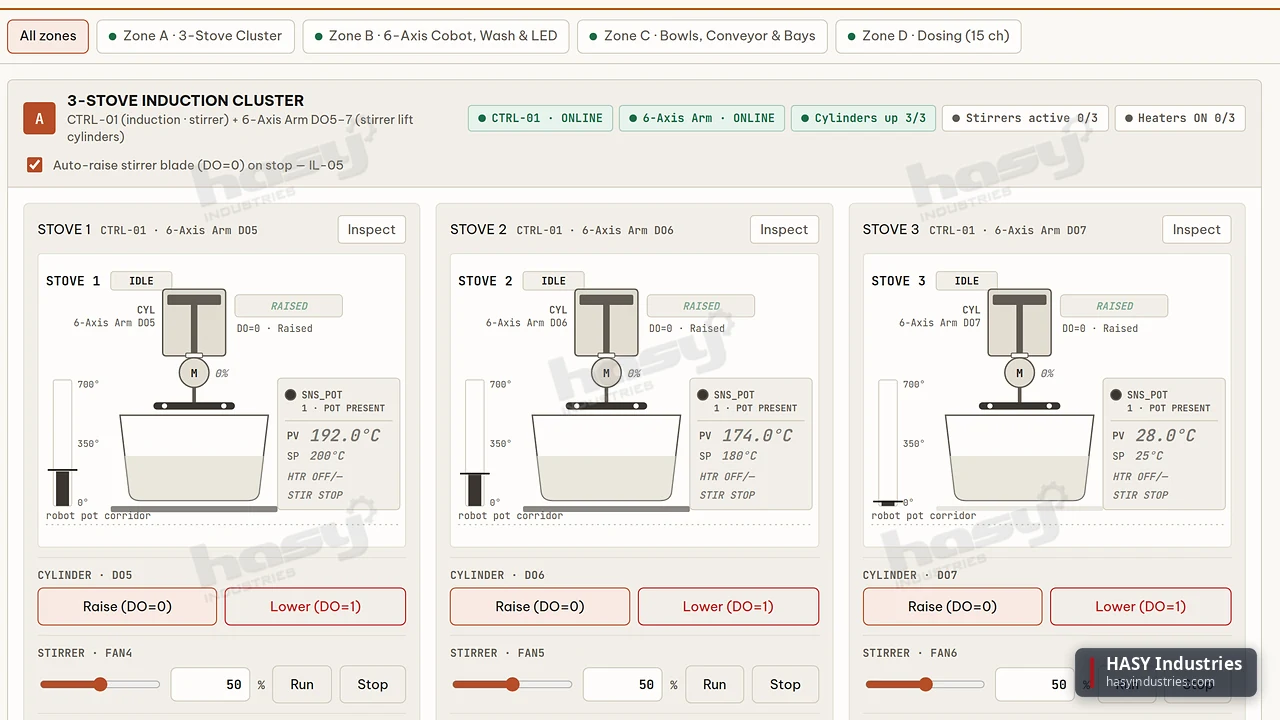
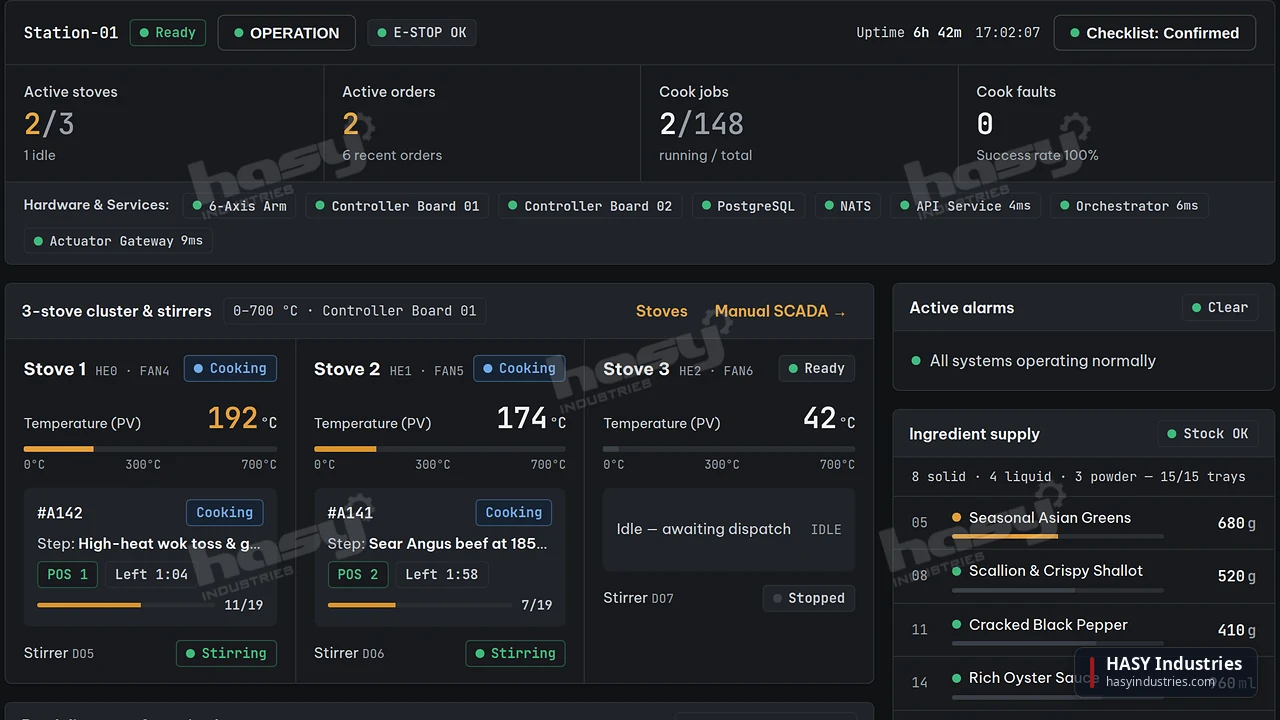
- All control services run locally on an industrial Edge PC with an offline-first architecture so cooking cycles continue uninterrupted even without external network connectivity.
- A parallel task-graph (DAG) scheduler coordinates a single 6-axis robotic arm across three concurrent cooking stations through prep, cook, bowl-prep, plate, and wash phases without mechanical conflict.
- Equipped with a front-mounted 21.5″ portrait Full HD HMI and web-based SCADA management interface for manual actuator control, visual recipe authoring, and rapid 15-channel calibration. Electrical ratings, throughput targets, and regional certifications are engineered and verified according to each project agreement.
5. Hasy Industries Engineering Team & Workshop Commissioning
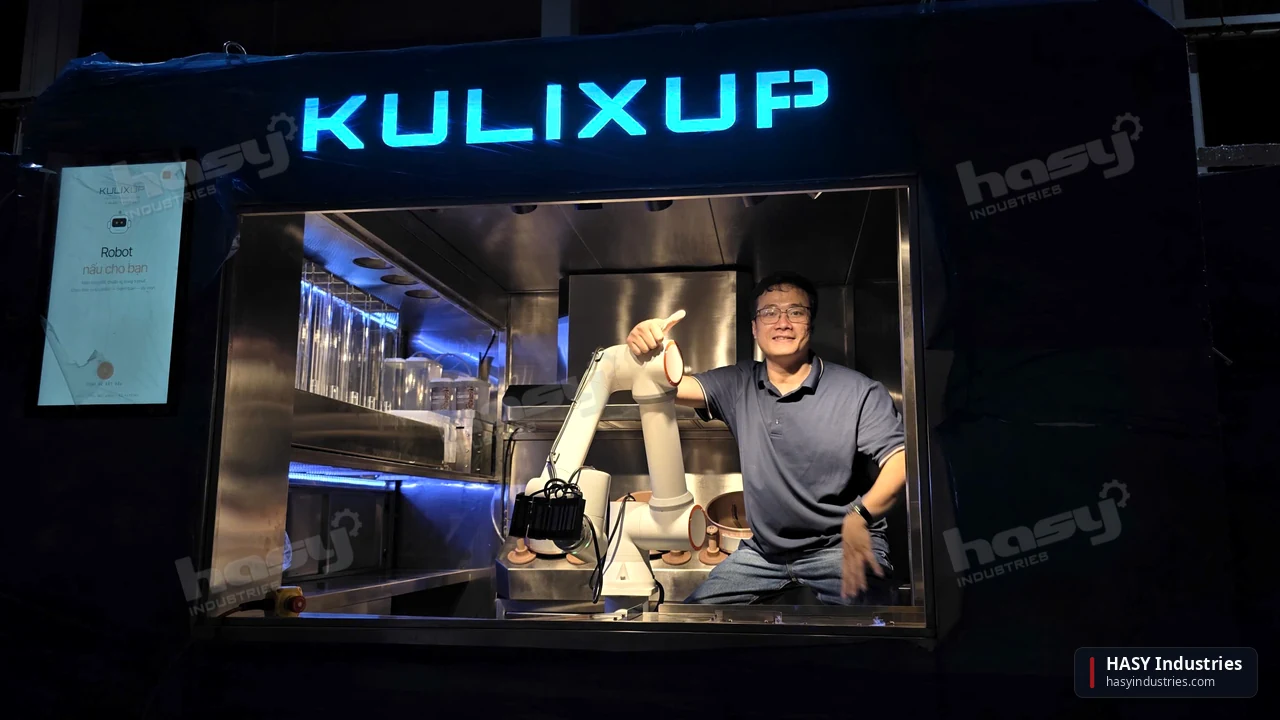
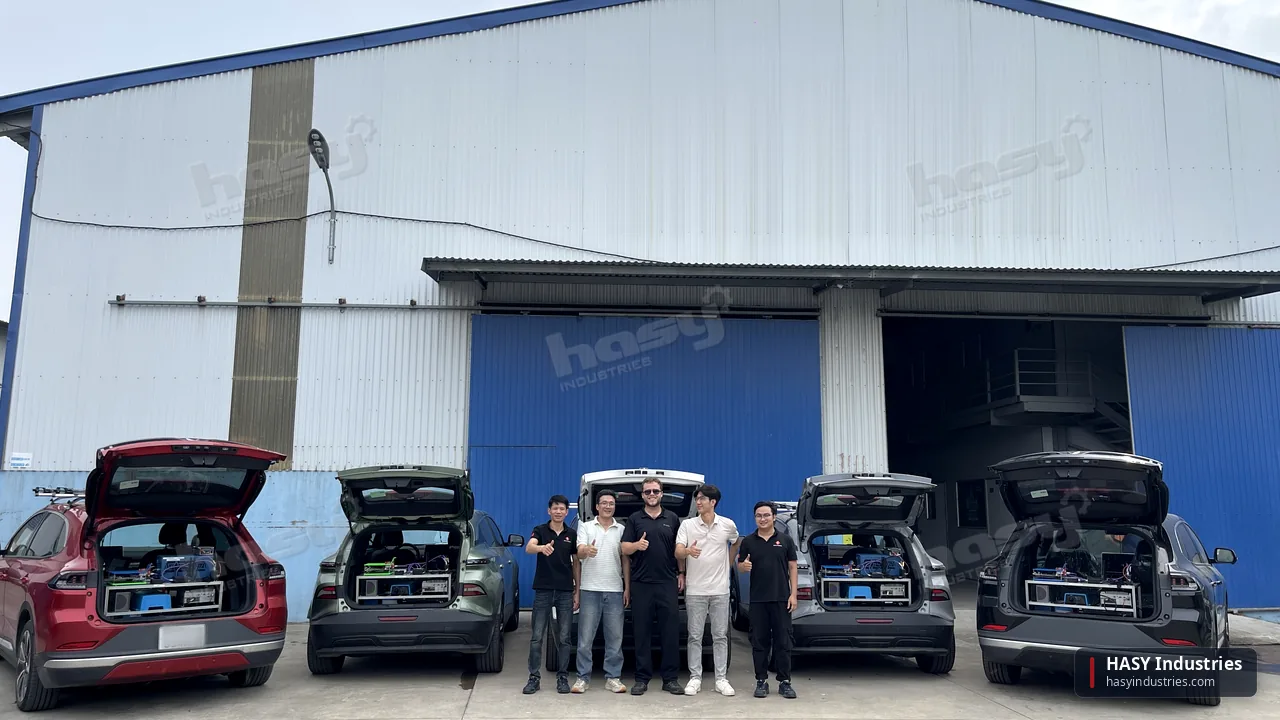
- Mechanical assembly, electrical and control wiring, 6-axis robotic trajectory teaching, and continuous load commissioning are executed and verified directly by the Hasy Industries engineering team in-house prior to delivery.